
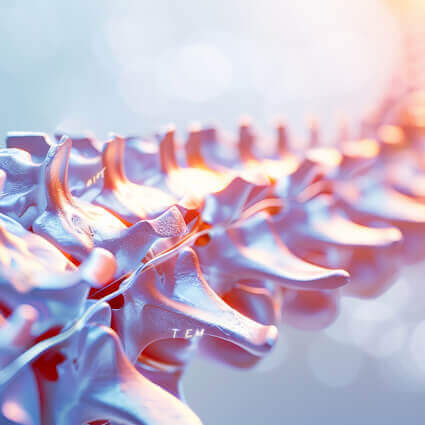
 The spine is a precisely engineered structure with natural curves that serve critical functions. Those curves distribute weight, absorb shock, protect the spinal cord, and allow for a full range of movement. When they’re in proper alignment, the entire musculoskeletal system operates more efficiently. When they are not, the consequences can take years to become fully apparent.
What Happens to the Spine During a Collision
In a rear-end collision, the torso is forced forward while the head lags behind, then snaps forward rapidly. This rapid motion places extreme stress on the cervical spine.
Even seat belts, which absolutely save lives, can introduce additional force. The shoulder strap restrains the chest, sometimes causing the head and neck to pivot over the belt. That rotational force adds stress to the primary whiplash motion. The mid and lower back may also be affected, especially in more forceful crashes.
Why Alignment Matters Over Time
When vertebrae shift out of their proper position, the spine does not function the same way. Discs and joints begin compensating. Pressure becomes uneven. Over months and years, that imbalance can accelerate disc degeneration, arthritis, and bone spur formation.
These changes often develop quietly. Someone may not connect chronic neck or back problems years later to a single accident in the past.
Correcting alignment shortly after a collision is very different from trying to address long-standing degeneration.
Why X-Rays Are Essential After an Accident
A physical exam alone cannot reveal the exact position of each vertebra. At Parkview Chiropractic Clinic, post-accident evaluations include spinal X-rays to assess curvature and alignment precisely.
Vehicle collisions, regardless of speed or severity, put the spine at risk. The only way to know for certain what happened to spinal alignment is to look. Contact our Oakdale clinic to schedule an evaluation. Early detection leads to better outcomes. Don’t wait for symptoms to decide whether to get checked.